

- English
- Español
- Italiano

Global Nations Accelerate Single-Use Plastic Ban Initiatives to Curb Pollution
Time: 2026-09-14 17:02:49
Click:
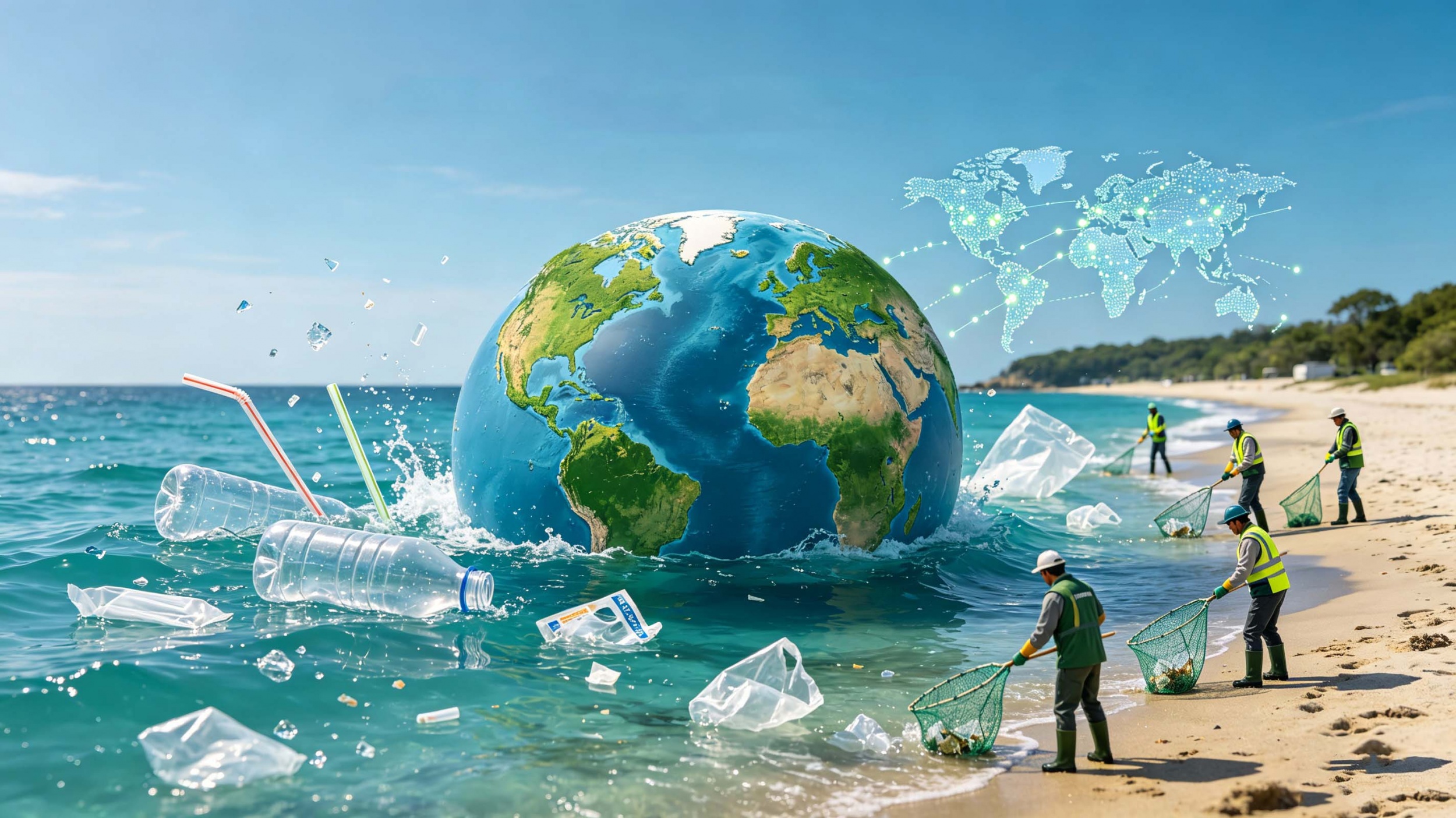
In 2026, countries in Europe, Africa and Asia have introduced stricter phased bans on single-use plastics. This article sorts out the latest plastic restriction policies of the EU, Botswana, Ghana, Georgia and India, and analyzes the global trend of plastic pollution control and the development of eco-friendly alternative materials.
A growing number of countries across Europe, Africa and Asia have rolled out stricter phased bans on single-use plastics in 2026, launching targeted crackdowns on disposable plastic bags, tableware, packaging and foam plastic products. The global push aims to mitigate ecological damage, protect public health, and advance the development of a circular economy amid worsening plastic pollution worldwide.
The European Union continues to lead regional plastic governance with its updated Packaging and Packaging Waste Regulation (PPWR). Under the new rules, the EU will ban single-use plastic packaging for fresh agricultural produce starting in 2030. It has set clear quantitative reduction targets, requiring a 5% cut in total packaging waste by 2030 and a 15% cut by 2040 compared with 2018 levels. Additionally, the bloc’s Single-Use Plastics Directive has fully prohibited common disposable plastic products including plastic cutlery, plates and straws, with ten EU member states having exceeded the mandatory plastic bottle collection targets ahead of schedule, marking remarkable progress in pollution control.
African countries are stepping up plastic restriction efforts with systematic policy layouts. The Government of Botswana officially announced a comprehensive phased ban on single-use plastic bags in August 2026. The Ministry of Environment and Tourism emphasized that the policy is formulated in accordance with presidential directives, targeting severe problems such as soil pollution, drainage blockages and livestock deaths caused by plastic waste, and will effectively safeguard local ecological security and public health.
Ghana has launched a phased plastic elimination strategy. The country’s Environmental Protection Authority (EPA) confirmed that the ban on expanded polystyrene (styrofoam) food containers, which will take effect on January 1, 2027, serves as the first phase of the national single-use plastic rectification campaign. Relevant officials stated that foam plastic products are non-biodegradable and prone to accumulating in urban water systems and soil. The ban will be followed by further restrictions on other non-degradable disposable plastic products to achieve full plastic pollution remediation.
Asian and West Asian countries have also introduced refined plastic restriction policies. Georgia implemented a ban on the sale of disposable plastic tableware including plastic knives, forks and spoons in April 2026, and will fully prohibit the supply of plastic bottled drinks in all public catering venues starting from July 1, 2026. In South Asia, India has revised its packaging regulations, explicitly banning all plastic packaging for betel nut products, and stipulating that only natural degradable materials such as paper and cardboard can be used for packaging to reduce microplastic contamination in food products.
Environmental experts pointed out that scattered single-use plastic waste will degrade into microplastics over time, penetrating soil, water bodies and the food chain, posing long-term hidden dangers to ecosystems and human health. The unified global plastic restriction actions reflect the consensus of all countries on ecological environmental protection. In the next stage, various countries will further improve supporting supervision mechanisms, accelerate the promotion of eco-friendly alternative materials, and balance environmental governance and industrial sustainable development.

点击右上角
分享给朋友吧







 Long by picture save/share
0
PREV
NEXT
More Information
-
Corn Starch and Pape...
With the implementation of global plastic ban policies, single-use plastics are phased out of the market. Corn starch biodegradable tableware and paper products become two major alternatives. Corn starch products feature good heat and water resistance for hot food and takeaway packaging. Paper packaging is cost-effective and easy to recycle for supermarkets and general packaging. These two eco-friendly materials complement each other to reduce white pollution and drive low-carbon transformation

-
Global Nations Accel...
In 2026, countries in Europe, Africa and Asia have introduced stricter phased bans on single-use plastics. This article sorts out the latest plastic restriction policies of the EU, Botswana, Ghana, Georgia and India, and analyzes the global trend of plastic pollution control and the development of eco-friendly alternative materials.
-
Global Sustainable T...
Driven by global low‑carbon goals and plastic‑restriction policies, corn‑starch disposable tableware is widely adopted as a green alternative to single‑use plastics. Updated material formulas improve heat‑resistant, waterproof and oil‑proof performance. The industry still faces cost and compost‑infrastructure challenges for global market expansion.
-
Corn‑starch Composta...
More countries are enforcing plastic‑ban legislation for single‑use food contact items. Corn‑starch compostable tableware offers a viable alternative for overseas catering buyers. This article covers material performance, export certification requirements, cost trends and existing industry limitations for global eco‑tableware procurement.
-
Corn-starch Disposab...
Driven by global single-use plastic bans, corn-starch disposable tableware sees explosive growth. It features high temperature resistance, full industrial compostability and low carbon emissions, widely used in catering, takeaway and airline industries. The market maintains double-digit annual growth, with Asian manufacturers expanding production to meet overseas demand.
-
Impacts of Corn-star...
This article analyzes the dual impacts of corn-starch-based disposable tableware on the global disposable tableware industry under overseas plastic ban policies, including its positive market effects, material limitations and long-term industry trends.



PREV
NEXT
 E-mail
 WhatsApp
 FaceBook
 Linkedin
 X
X Pinterest
 Messenger
 Youtube
 X
X Pinterest
 Linkedin